How to Thrift Like a Pro and Score Designer Style
Quick Answer: Thrift well by going in with a loose list rather than a rigid one, shopping by fabric content instead of by size label, and checking seams, zippers, and armpits before anything else. Natural fibers — wool, silk, cashmere, leather, linen — are the fastest signal of a quality piece. Visit often: thrifting is a numbers game, and the best finds go to whoever showed up on restock day.
Someone in your feed found a cashmere coat for $12 last week.
They didn’t get lucky. They went in on a Tuesday morning, knew exactly which rack to hit, and could tell wool from acrylic by touch in under two seconds.
That’s a learnable skill set. Here’s the whole thing.

Should You Go Thrifting With a Plan or Browse Freely?
Both — and the balance is the actual skill.
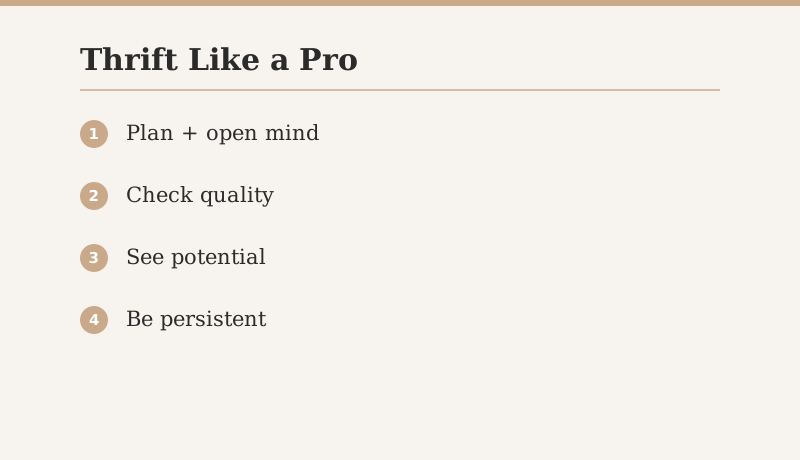
Go in with a loose list. Three or four categories: “a wool coat, quality knits, dark denim.” That’s specific enough to stop you drifting aimlessly through 4,000 garments and vague enough to leave room for the thing you didn’t know existed.
A rigid list fails. “Black size 8 blazer, single-breasted, notched lapel” will have you leaving empty-handed 95% of the time. Secondhand inventory is random by definition — you can’t summon a specific item.
Know your measurements, not your size. Sizing has drifted enormously over decades. A 1980s size 12 is roughly a modern size 6; European and Japanese sizing are different systems entirely. Carry a soft tape measure or memorize your bust, waist, hip, and inseam in inches. This single habit doubles the racks you can shop.
Shop the whole store, not your section. Men’s shirts, oversized blazers, and men’s cashmere sweaters are consistently the best-value racks in any thrift store — less picked over, better fabrics, lower prices.

How Do You Spot Quality in a Thrift Store?
Learn to read a garment in fifteen seconds. Four checks, in order:
1. Fabric content, first and always. Flip to the care label. Wool, cashmere, silk, linen, leather, and high-percentage cotton are worth pulling off the rack before you’ve even seen the front. Polyester, acrylic, and viscose blends are usually not — with the exception of well-made vintage pieces where the construction carries it.
If there’s no label, touch it. Natural fibers feel cool and dense; synthetics feel slick and warm. This gets fast with practice.
2. Seams and finishing. Turn it inside out. French seams, bound edges, and generous seam allowance mean the garment was made to last and can be altered. Raw overlocked edges with quarter-inch allowance mean fast fashion and no alteration room.
3. Hardware. Run the zipper twice. Metal zippers with a brand stamp are a good sign; sticky plastic ones are a repair job. Check every button and look for a spare stitched inside — a real quality signal.
4. The damage check. Armpits (yellowing and thinning), elbows, the seat of trousers, and the inner thigh of jeans. Hold it up to the light for moth holes in anything wool. Sniff it — genuine mustiness washes out, but smoke and mildew often don’t.
A well-made vintage piece regularly outperforms new fast fashion for a fraction of the price. The label matters far less than the label inside.

What Nobody Tells You About Thrifting
- Timing beats technique. Most thrift stores restock overnight or early morning on weekdays. Tuesday and Wednesday mornings are consistently the best inventory; Saturday afternoon is the picked-over remains.
- Wealthy neighborhoods, obviously. Donations reflect the surrounding area. A thrift store near an affluent zip code has an entirely different rack than one twenty minutes away.
- Budget $15–30 for tailoring on anything you love. A hem, a taken-in waist, or a shortened sleeve turns a $10 near-miss into a piece that fits better than anything off a retail rack. This is where thrifting actually beats retail.
- Some flaws are worth ignoring, and some aren’t. A missing button, a fallen hem, a stain on a wool coat that dry cleaning will lift — all fine. Underarm yellowing on silk, moth holes in cashmere, and a broken invisible zipper on a lined dress are usually not worth the cost of fixing.
- The best thrifters buy less, not more. This surprises people who expect hauls. Skilled thrifters walk out empty-handed half the time and buy three excellent things a season rather than fifteen mediocre ones.
How Do You Look Past a Bad First Impression?
Almost every great thrift find looks unpromising on the rack.
Thrift store garments are hung on wire hangers, crushed between forty other pieces, unironed, and often mis-sectioned. A silk blouse that would cost $200 new looks like a sad rag in that context.
Learn to see three things:
- Potential after a wash and press. Wrinkles and a stale smell are almost always temporary. Judge fabric and cut, not condition.
- Potential after a small repair. A missing button is a two-dollar fix. A fallen hem is fifteen minutes.
- Potential after styling. An unfashionable 2000s silhouette in beautiful wool becomes current when belted, cropped, or worn oversized. Fabric is permanent; silhouette is negotiable.
Trying things on is non-negotiable. Sizing is unreliable, and a garment that looks wrong flat frequently looks entirely different on a body.
Why Is Persistence the Actual Skill?
Because thrifting is a numbers game and everyone underestimates how much of one.
A typical thrift store holds several thousand garments, of which maybe twenty are genuinely excellent, of which maybe two are your size and taste. That’s roughly a 0.05% hit rate per visit.
Which means: frequent short visits beat rare long ones. Twenty minutes weekly at the same store finds more than three hours once a month, because you’re catching different restocks.
Build a rotation. Three or four stores you cycle through, with a rough sense of each one’s strengths — one good for coats, one for denim, one for homeware. Learn their restock days.
And accept the empty-handed trips. They’re not failed visits; they’re the cost of the ones where you find the cashmere coat for $12. The person in your feed had eleven empty trips before that one.
Frequently Asked Questions
What day is best to go thrifting?
Tuesday and Wednesday mornings are consistently strongest, since most stores process donations overnight and restock on weekday mornings. Saturday afternoon is the most picked-over time of the week. Call ahead and ask when they put new stock out — staff will usually tell you.
How do you tell if a thrifted item is good quality?
Check fabric content first — wool, cashmere, silk, linen, and leather are worth pulling immediately. Then turn the garment inside out and look at the seams: bound edges and generous seam allowance mean quality construction, while raw overlocked edges with a quarter-inch allowance mean fast fashion.
Should you wash thrifted clothes before wearing them?
Yes, always. Wash or dry clean everything before it enters your wardrobe. Most mustiness washes out completely; smoke and mildew odors frequently don’t, which is worth checking by smell before you buy rather than after.
Is it worth paying for alterations on thrifted clothes?
Usually, yes — it’s where thrifting genuinely beats retail. A $10 garment plus $20 of hemming fits better than most $150 pieces off a rack, since it’s adjusted to your actual measurements. Budget $15–30 for anything you love that doesn’t quite fit.
TL;DR:
- Go in with a loose list of 3–4 categories, not a rigid item. Know your measurements, not your size.
- Read fabric content first — wool, cashmere, silk, linen, leather. Then seams, then hardware, then damage.
- Shop the men’s racks and shop wealthy neighborhoods. Tuesday and Wednesday mornings beat Saturday.
- Budget $15–30 for tailoring; that’s where thrifting genuinely beats retail.
- It’s a numbers game. Short frequent visits, a rotation of 3–4 stores, and no shame in leaving empty-handed.
Keep Reading
This article is for general styling and informational purposes only. Trends, sizing, availability and pricing may vary by brand and season.