Thrift & Style

Secondhand style that looks anything but

How to Thrift Like a Stylist and Find Real Gems

2026-07-13

Quick Answer: Great thrifting is a method, not luck. Check fabric composition tags first (natural fibers and substantial blends signal quality), ignore the size on the label and check the actual measurements, shop every section rather than just your usual one, and go often — stock turns over weekly. Budget 45 minutes per visit and go in with a specific gap list.

Thrifting is equal parts treasure hunt and skill, and the payoff is real: unique, well-made pieces at a fraction of retail, with a sustainability bonus attached.

But the people who consistently come home with good things aren’t luckier than you. They’re running a process. They know what to touch first, which sections to walk, and what makes something worth trying on.

Here’s that process — and the fabric trick in the second section is the one that changes your hit rate most.

How to Thrift Like a Stylist and Find Real Gems

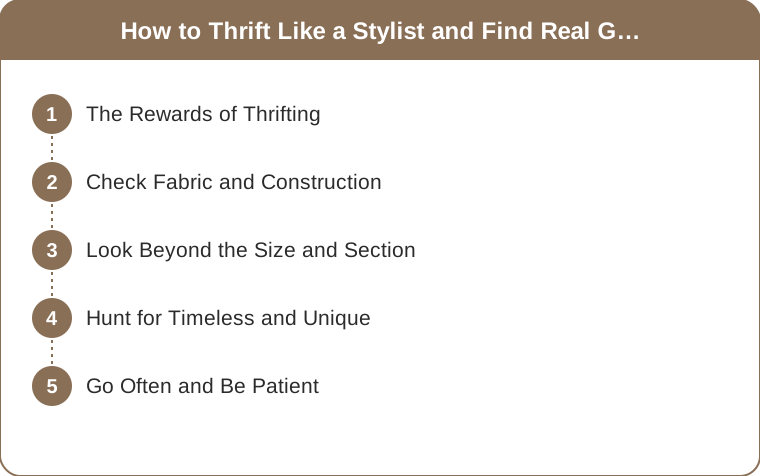
At a glance

Why Is Thrifting Worth the Effort?

Three payoffs, and they compound.

Quality per dollar. Clothing made 15 or 20 years ago was frequently constructed better than similarly priced clothing today — heavier fabrics, real linings, seams with allowance to let out. You’re often buying a higher construction tier than your budget would reach new.

Genuine uniqueness. Nobody else at the event is wearing it. That’s difficult to buy at any price in a market where the same twelve silhouettes circulate everywhere.

Keeping clothes in use. Extending a garment’s life is the single most effective thing an individual can do to reduce the environmental cost of their wardrobe — more than fabric choice, more than brand ethics.

The finds are also, straightforwardly, thrilling. That part matters for whether you keep doing it.

Check Fabric and Construction First

Here’s the shift that separates efficient thrifters from browsers: read tags before you look at the garment.

Walk the rack running your hand along the fabric. When something feels substantial, check the composition tag. You’re looking for wool, silk, linen, cashmere, real leather, heavy cotton, or blends with a high percentage of those.

Then check three construction points, in this order:

Seams. Turn the garment inside out. French seams, bound edges, or generous seam allowance mean it was built to last and can be altered. Raw overlocked edges with a quarter inch of allowance mean neither.

Lining. A lined jacket, skirt, or dress is almost always from a higher construction tier than an unlined one.

Hardware. Metal zippers and real buttons versus plastic. Check that the zipper runs smoothly — a broken zipper is a $20 repair, which changes the math on a $6 find.

Then check for damage: underarms, elbows, the seat, hems, and buttonholes. Pilling and small holes are common; whether they’re fixable determines whether the price is good.

How to Thrift Like a Stylist and Find Real Gems

Look Beyond the Size and Section

Sizes on secondhand clothing are close to meaningless. Sizing standards have shifted substantially over decades, and vintage sizing runs dramatically smaller than contemporary equivalents.

Carry a soft measuring tape, or at minimum know your own measurements and use your forearm as a rough gauge for waistbands. Judge the garment, not the number.

Shop every section. The men’s department is where oversized blazers, heavy knits, and excellent shirts live, often at lower prices because fewer people are looking. Kids’ sections carry good scarves and occasionally jackets. The “wrong” size rack holds things that will fit after a $20 alteration.

Factor alterations in before you decide. A too-large blazer with good shoulders is a great find — shoulders are the one thing that can’t easily be altered, and everything else can. A too-small anything usually isn’t, unless there’s visible seam allowance.

Hunt for Timeless and Unique, Not Trendy

Trend-chasing wastes the opportunity thrifting gives you.

The two categories worth your time: genuine classics that will still look right in five years — good coats, wool trousers, silk shirts, leather bags, well-made knitwear — and true one-of-a-kind pieces you couldn’t buy new at any price.

The category to skip: last season’s fast fashion. It’s cheap because it was cheap, it’s already showing wear, and it’ll look dated faster than it wears out.

There’s a reason coats and outerwear are the best thrift category overall: they’re expensive new, they’re constructed carefully, they show wear slowly, and people donate them for reasons of taste rather than condition.

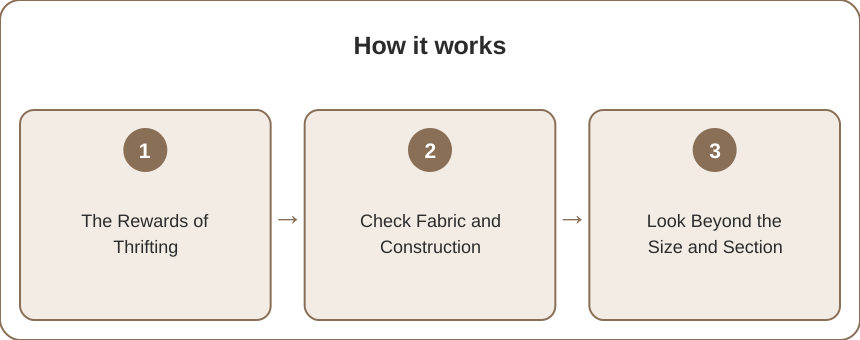
How it works

Go Often and Be Patient

Thrift stock turns over constantly — most stores put out new inventory daily and rotate the floor weekly. That means the store you found nothing in last Tuesday is a completely different store this Tuesday.

Frequency beats duration. Four 45-minute visits a month will find you more than one three-hour marathon. Long visits also produce decision fatigue, which is where bad purchases come from.

Learn your stores’ restock days. Most staff will tell you if you ask. Shopping the morning after restock roughly doubles your odds.

Go with a gap list, not a mood. Write down the three or four things your wardrobe actually needs and keep the list on your phone. You’ll still buy the unexpected treasure — that’s the point — but the list stops you buying four things you already own versions of.

Accept the empty visit. Roughly half of thrift trips produce nothing. That’s not failure; it’s the base rate. The people with great secondhand wardrobes just kept showing up.

5 Mistakes Everyone Makes

  1. Buying because it’s cheap. $6 for something you’ll never wear is $6 wasted plus closet space. The price only matters if you’d want the item at three times the price.
  2. Skipping the try-on. Fitting rooms are sometimes closed, but you can always try things over your clothes. Buying unworn secondhand with no returns is how the unworn pile grows.
  3. Ignoring the smell test. Some odors — smoke, mildew, certain storage smells — don’t come out. Check before you commit.
  4. Shopping only your size and only your section. This eliminates most of the store, including the parts with the least competition.
  5. Not budgeting for repairs. A $10 find plus a $25 alteration is a $35 garment. Often still excellent value — but decide with the real number.

Mini FAQ

What should you look for when thrifting for quality?

Start with the composition tag: wool, silk, linen, cashmere, heavy cotton, and real leather all signal a higher tier. Then check the seams for generous allowance or bound edges, look for a full lining, and test the zipper. Those four checks take under 30 seconds per garment.

How do you find good stuff at thrift stores consistently?

Go frequently rather than for a long time — 45 minutes, several times a month. Learn your stores’ restock days, shop every section including menswear, judge by measurements rather than labels, and arrive with a written gap list.

Is it safe to buy secondhand clothing?

Yes, with normal precautions. Wash everything before wearing — hot wash where the fabric allows, or dry cleaning for wool and silk. Skip anything with visible mildew or a persistent odor, and inspect for damage before buying rather than after.

TL;DR:

  • Read composition tags before you look at the garment — fabric is the fastest quality filter.
  • Check seams, lining, and hardware; then check underarms, elbows, seat, and hems for damage.
  • Ignore the size label. Bring a tape measure and shop every section, menswear included.
  • Hunt classics and true one-offs. Skip last season’s fast fashion entirely.
  • Go often, learn restock days, carry a gap list, and accept that half of visits find nothing.

Thrifting like a stylist is strategy, not luck. Check the fabric, look past the label, hunt the timeless, and keep showing up — the gems are genuinely there, and now you know what they look like.

Keep Reading

This article is for general styling and informational purposes only. Trends, sizing, availability and pricing may vary by brand and season.

thriftingsecondhandsustainable style

← All articles